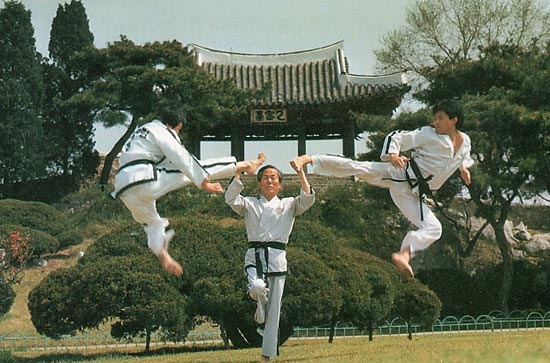
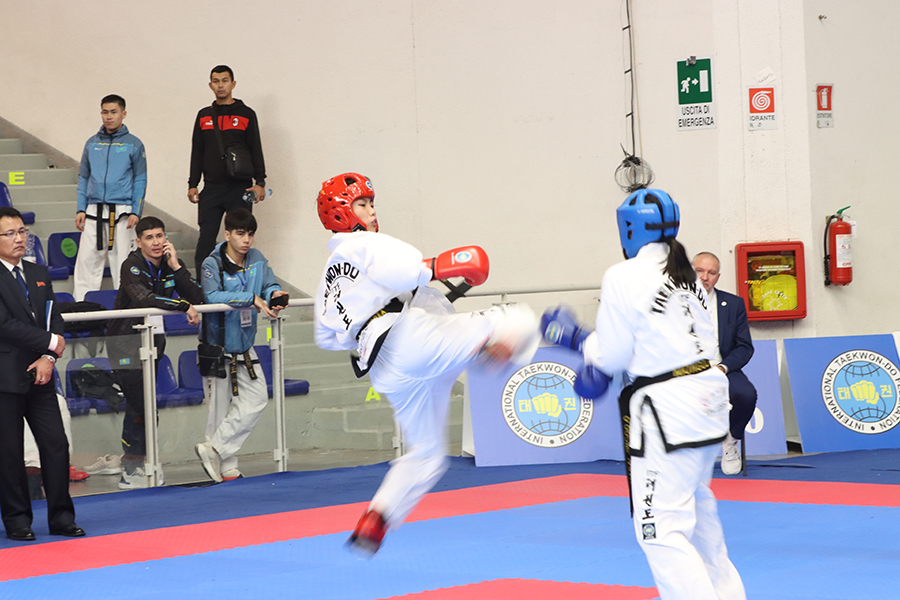
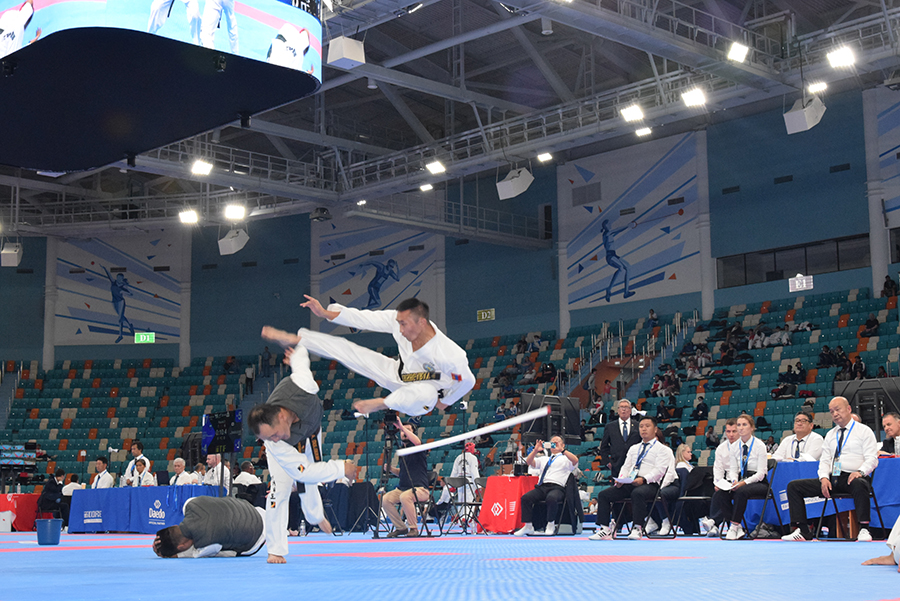
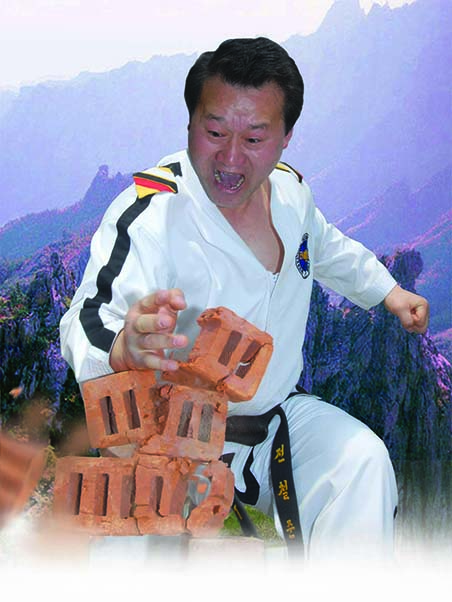
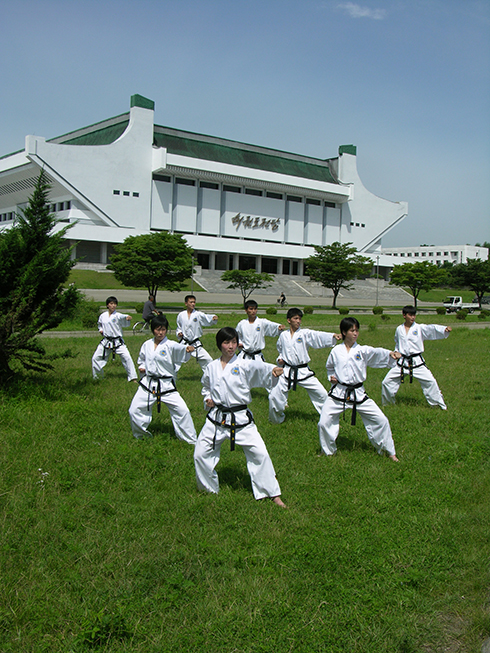
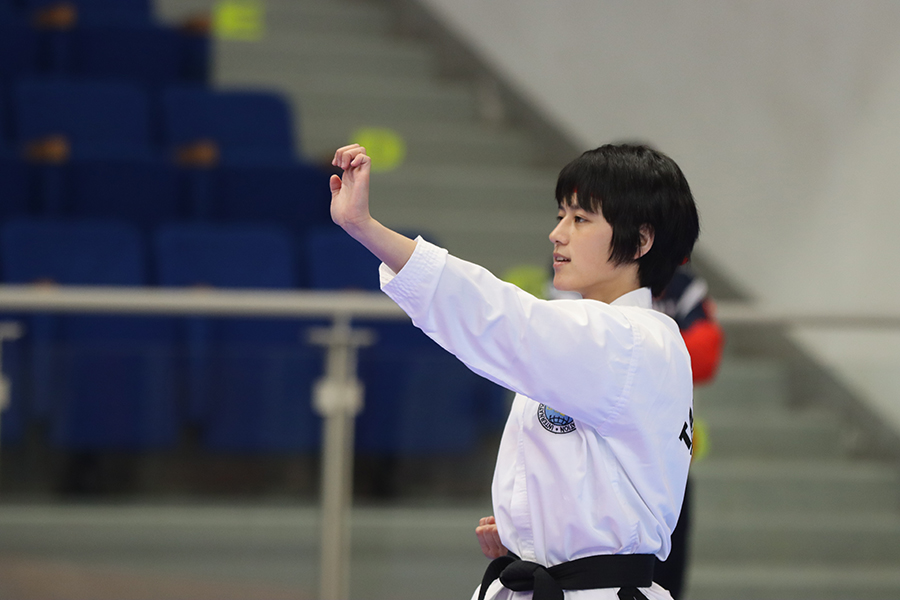
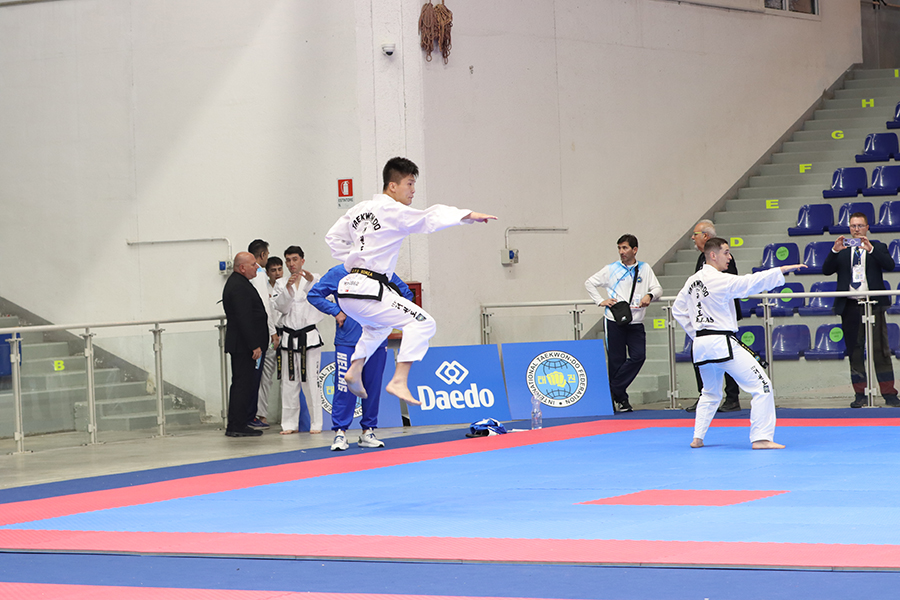
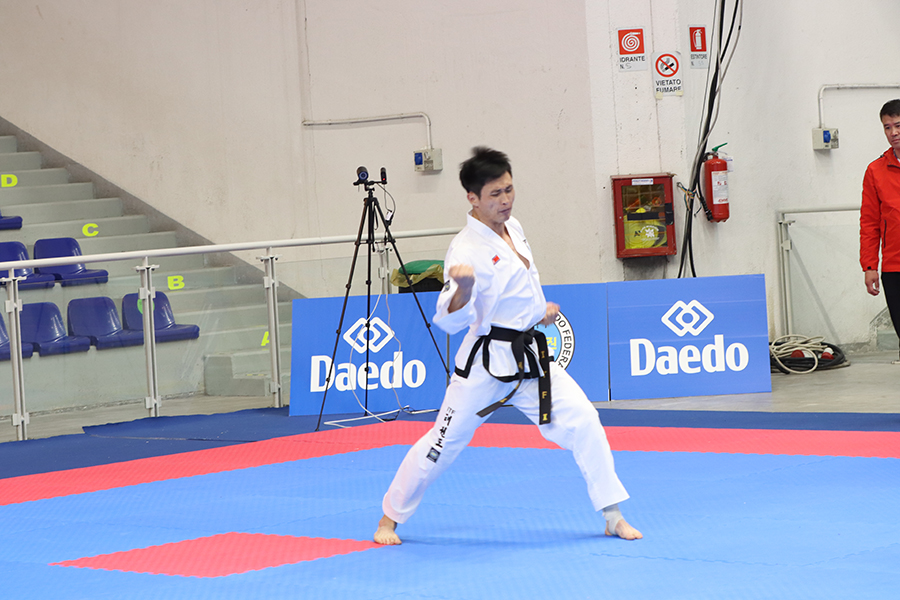
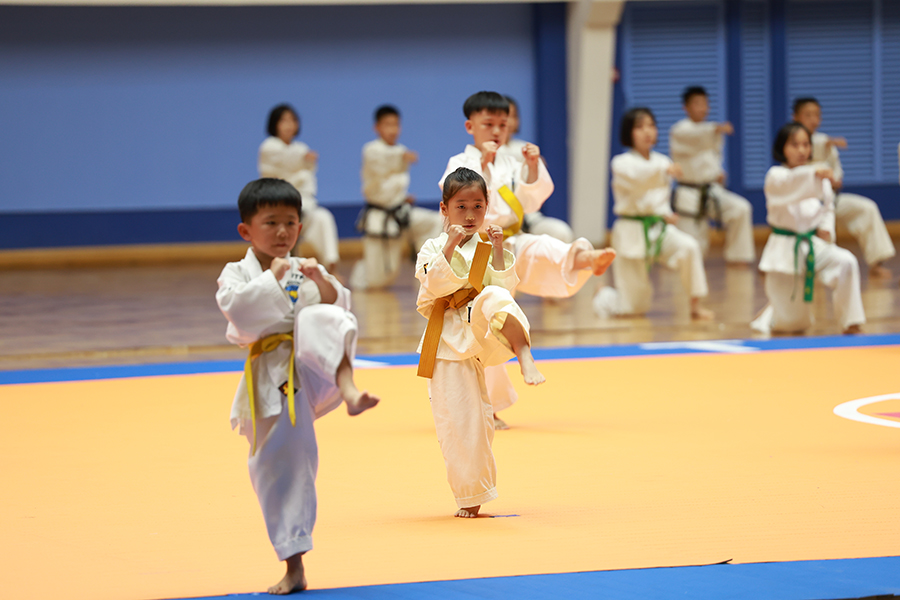
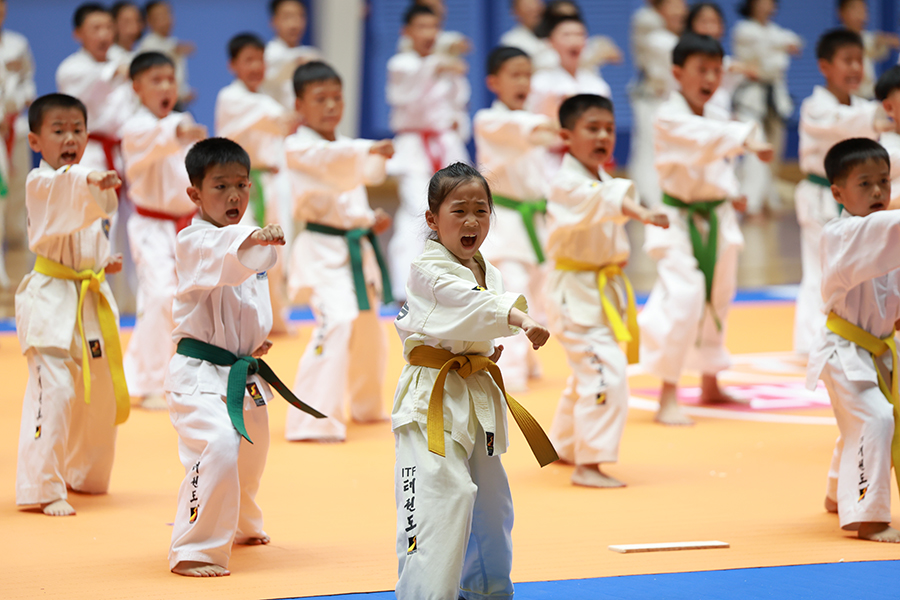
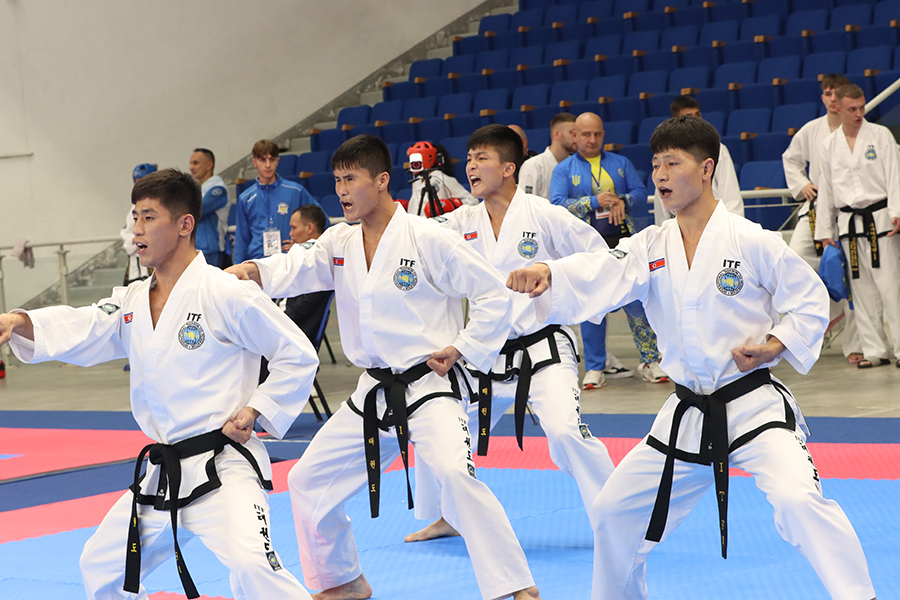
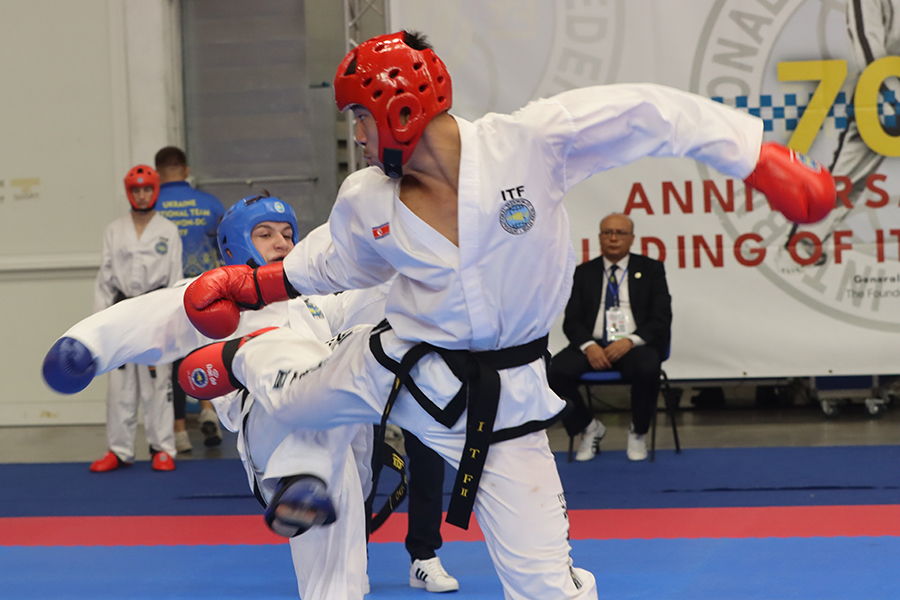
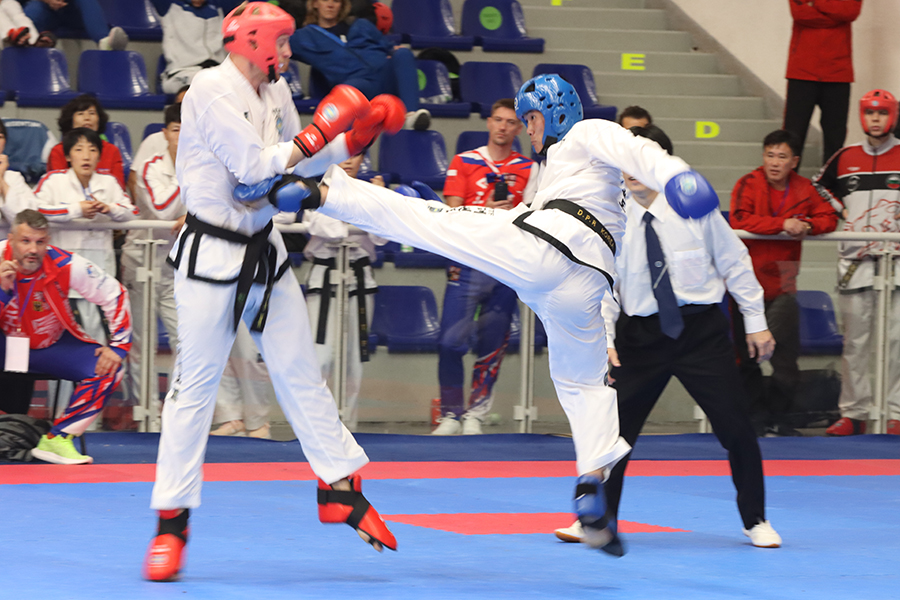
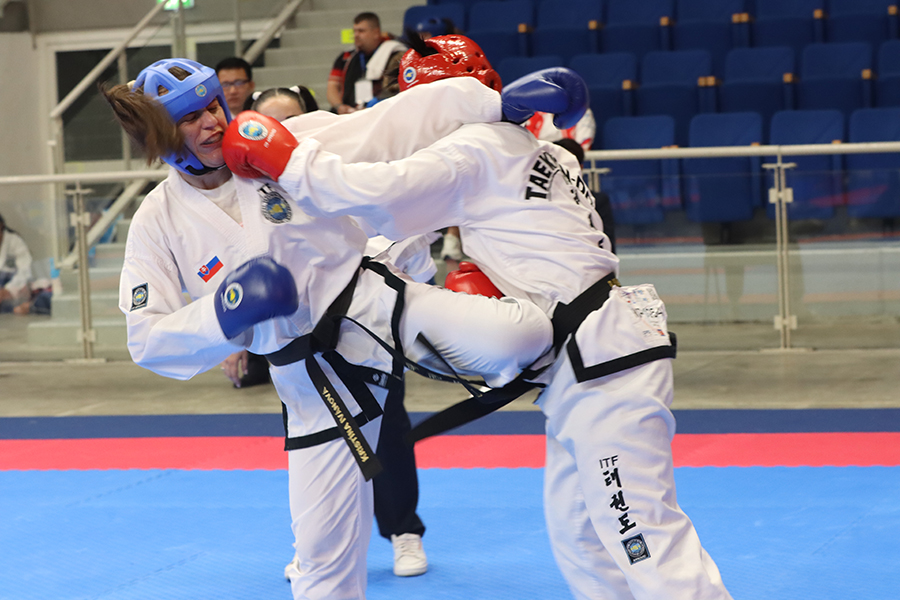
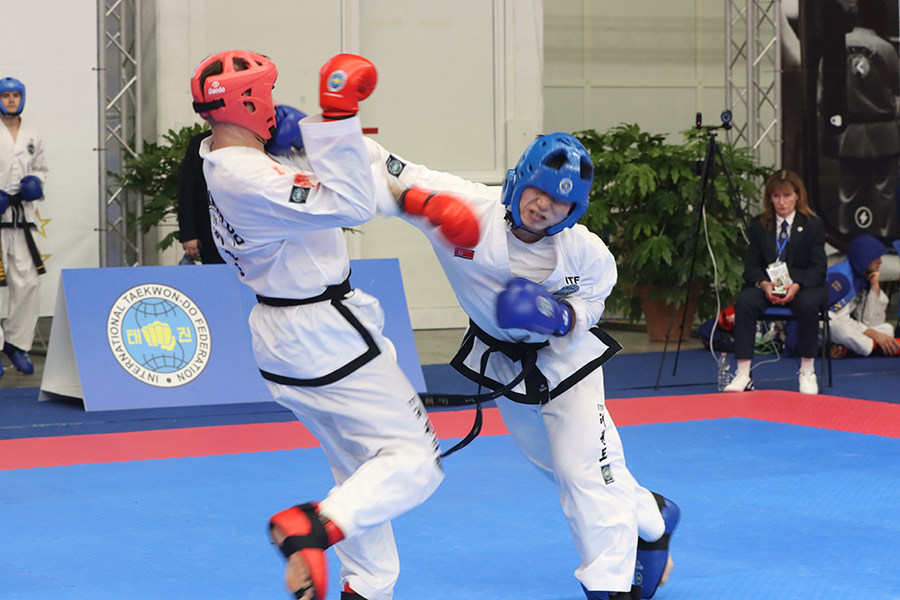
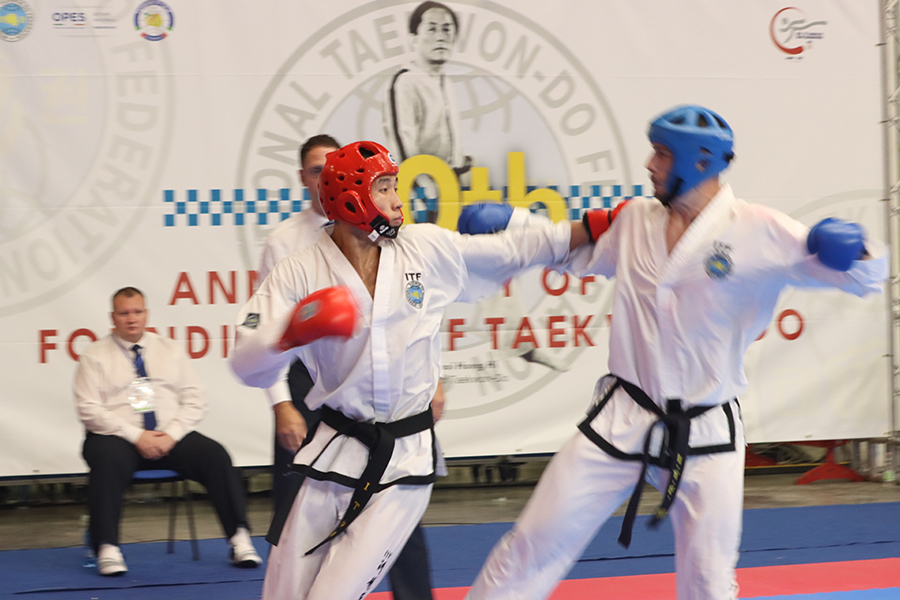
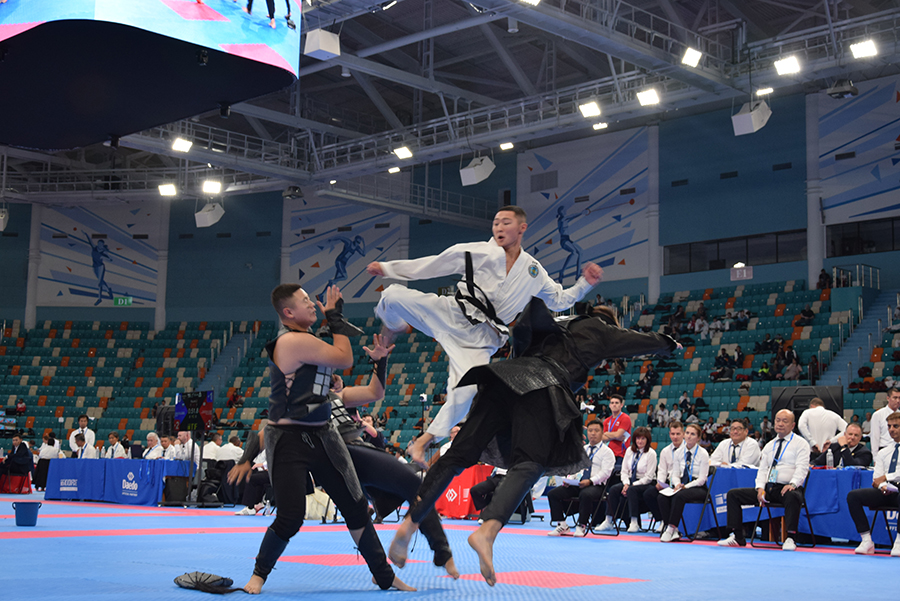
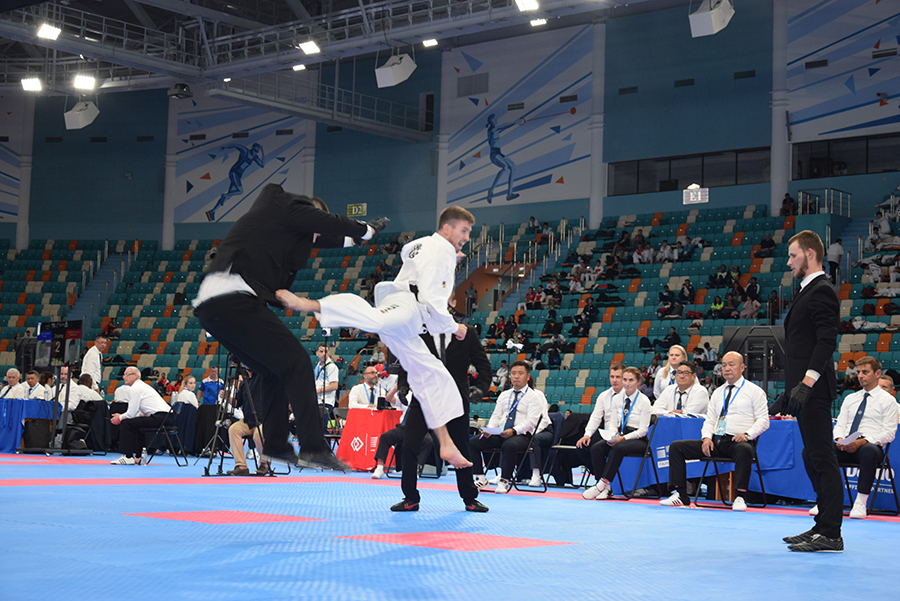
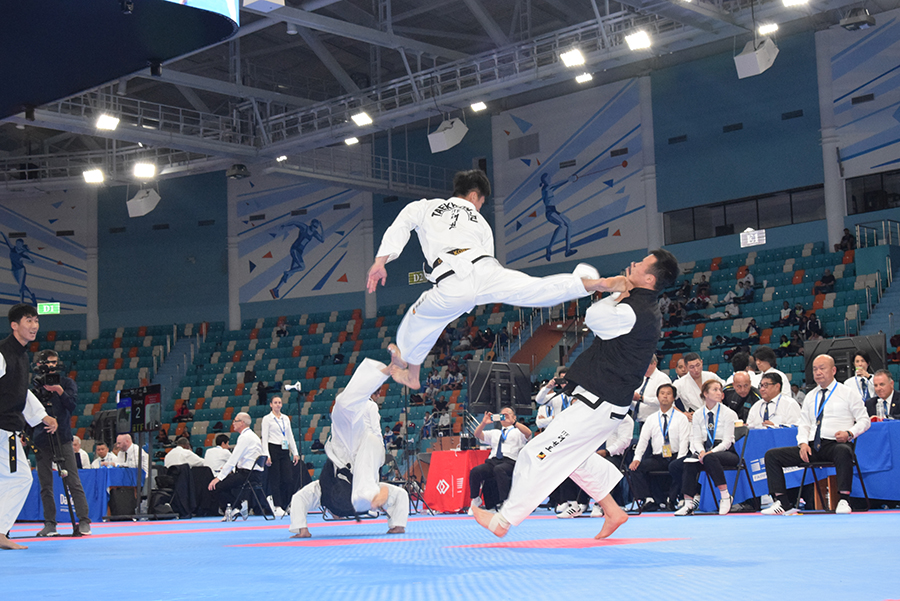
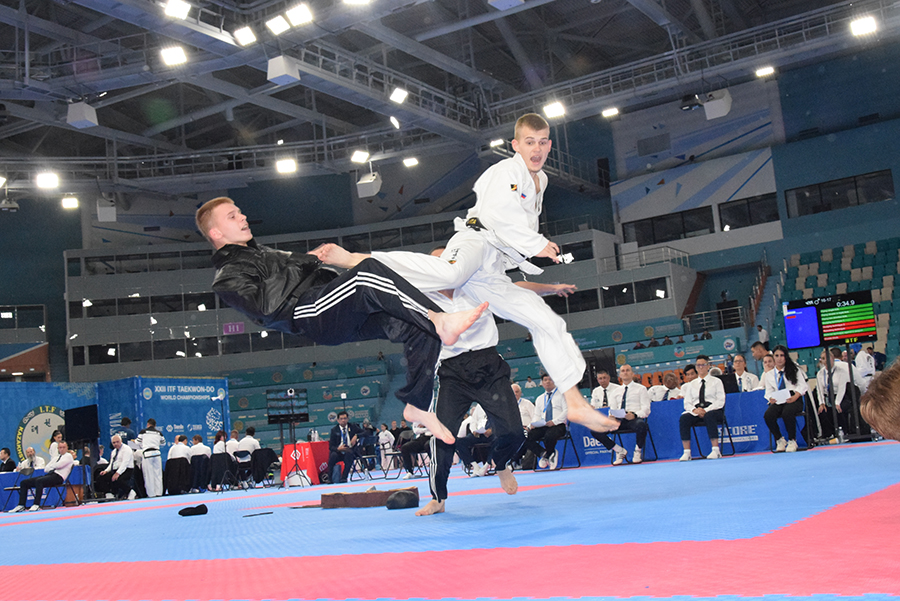
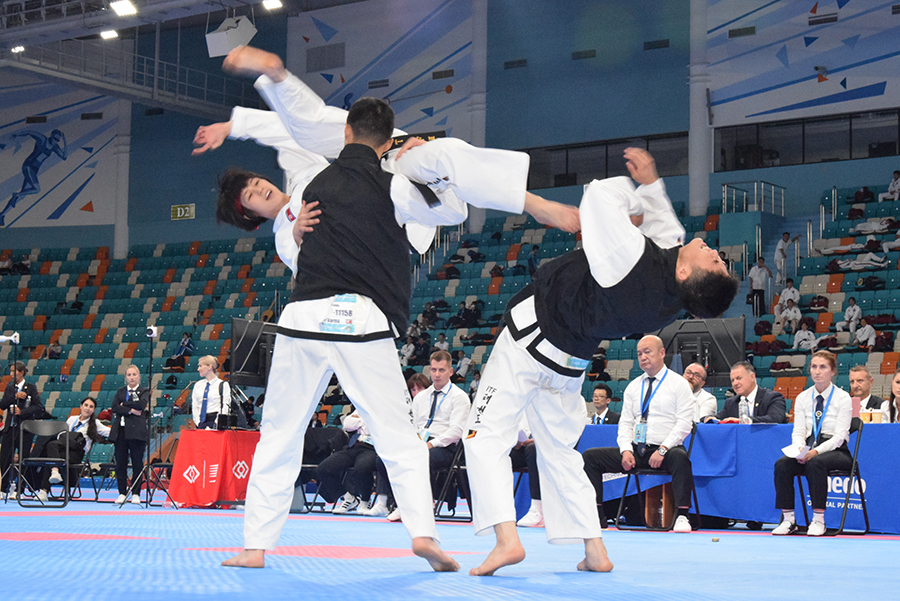
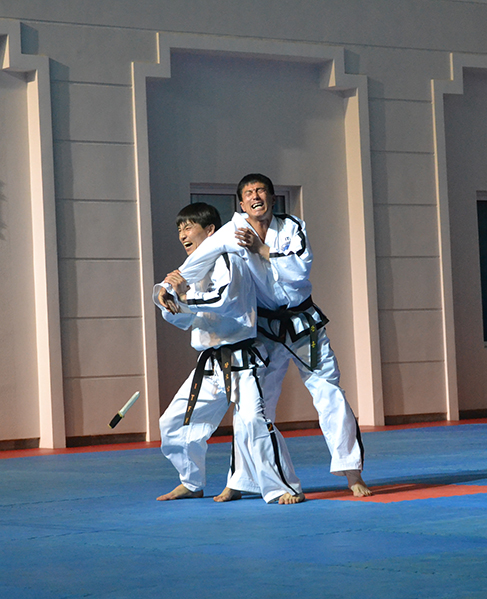
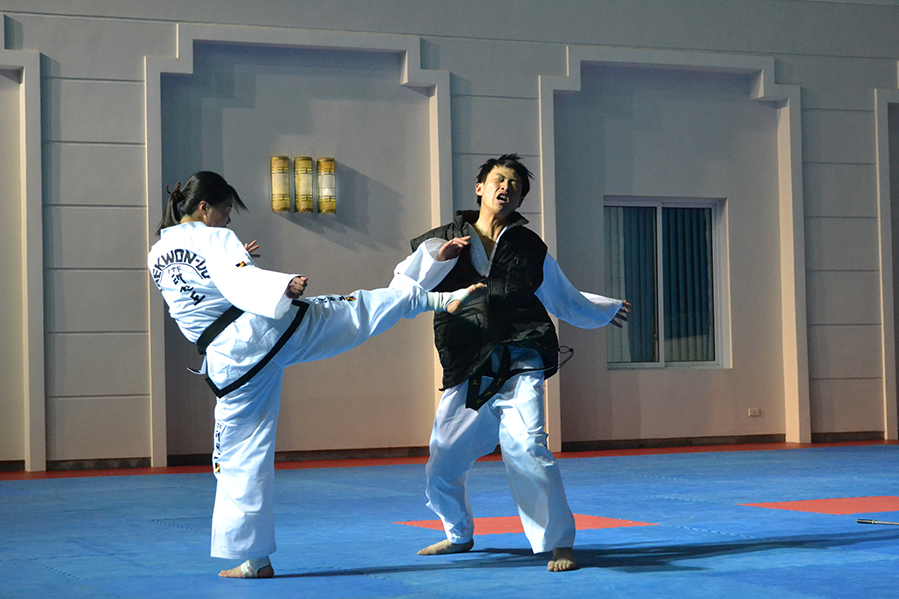
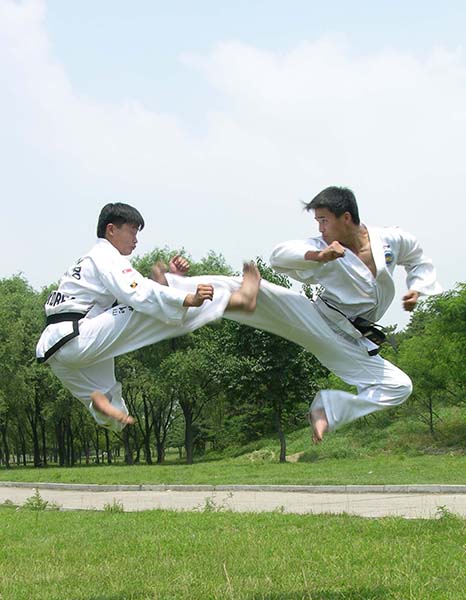
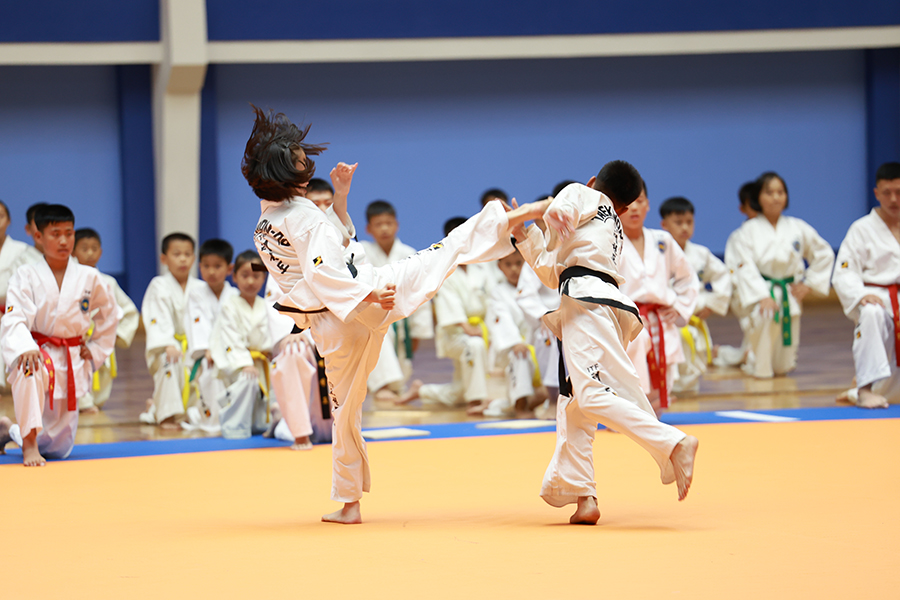
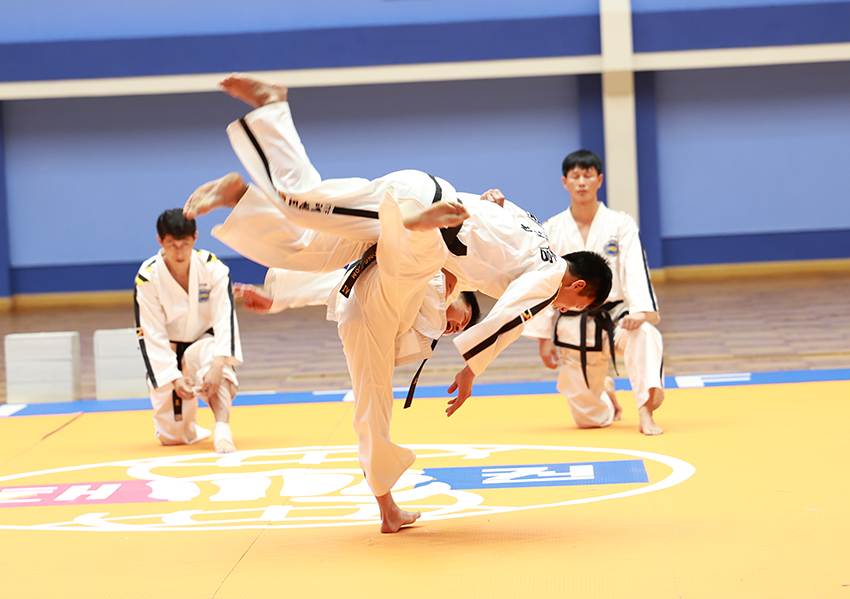
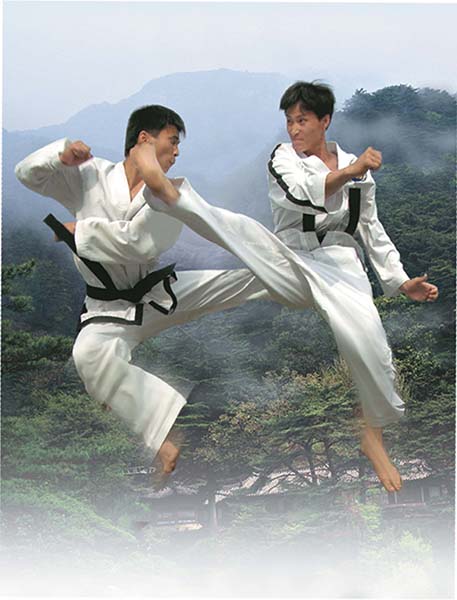
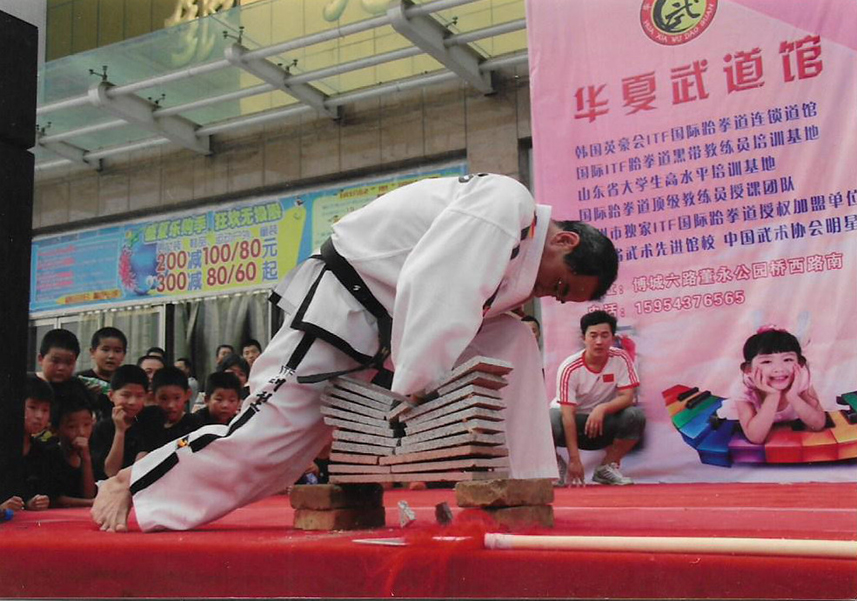
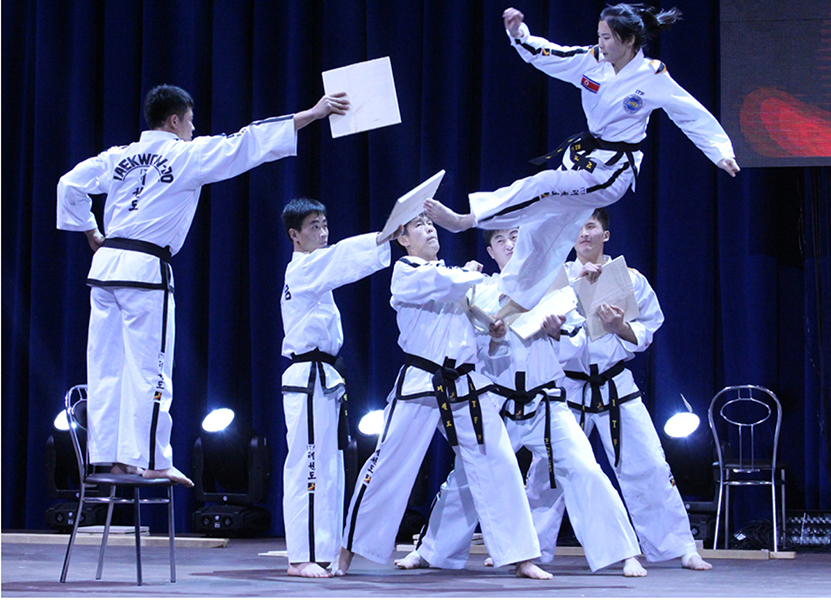
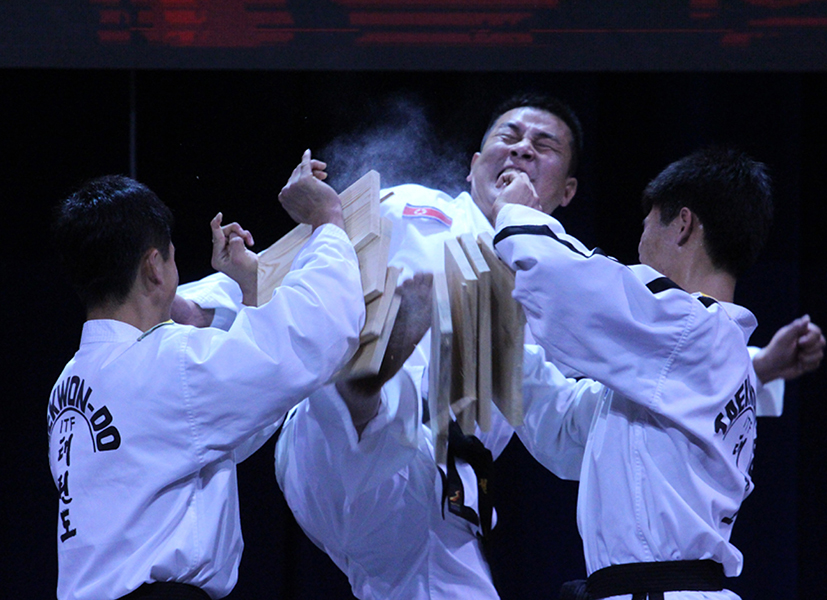
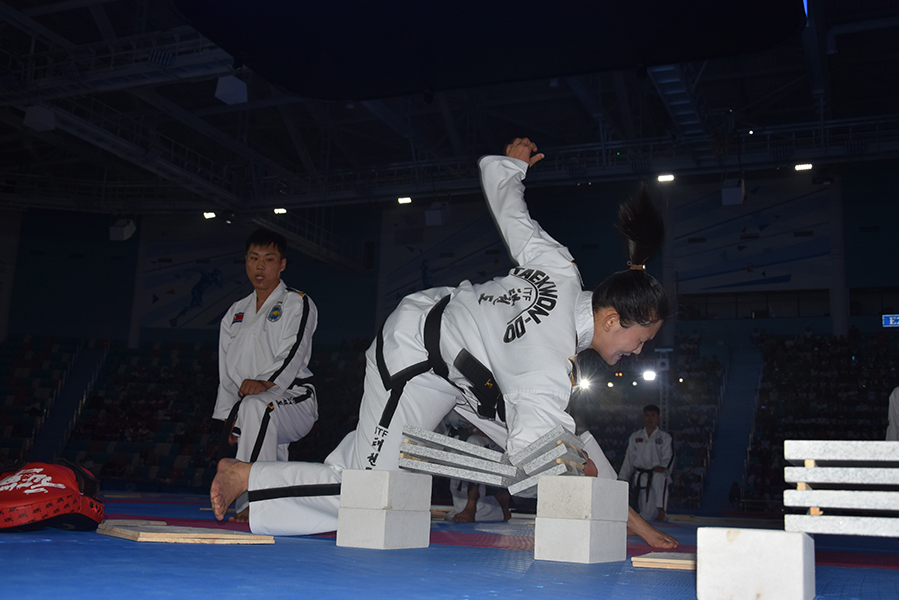
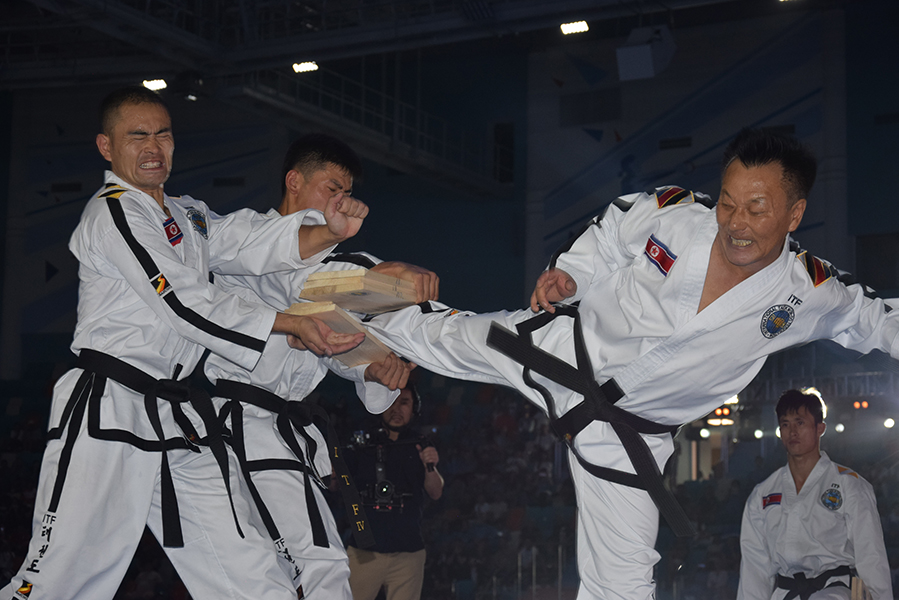
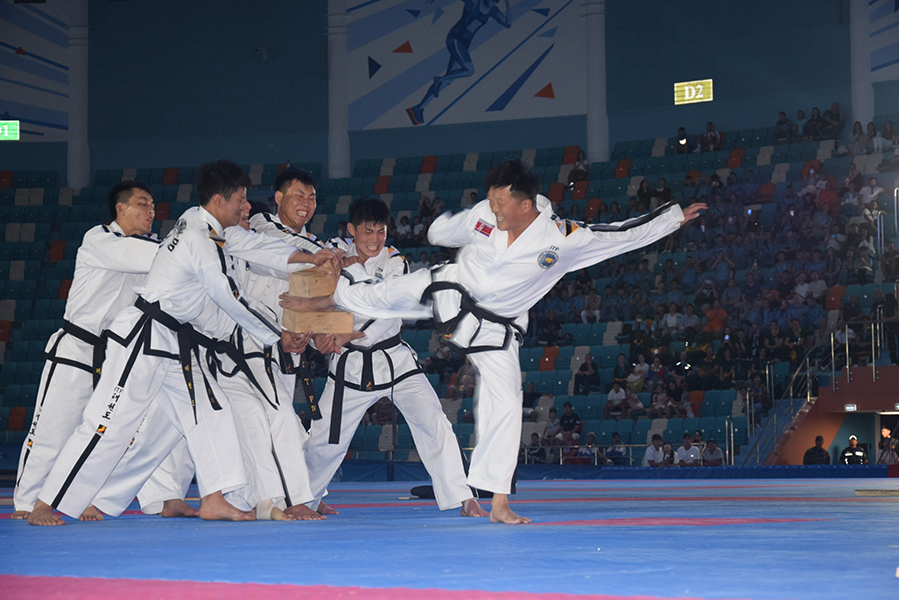
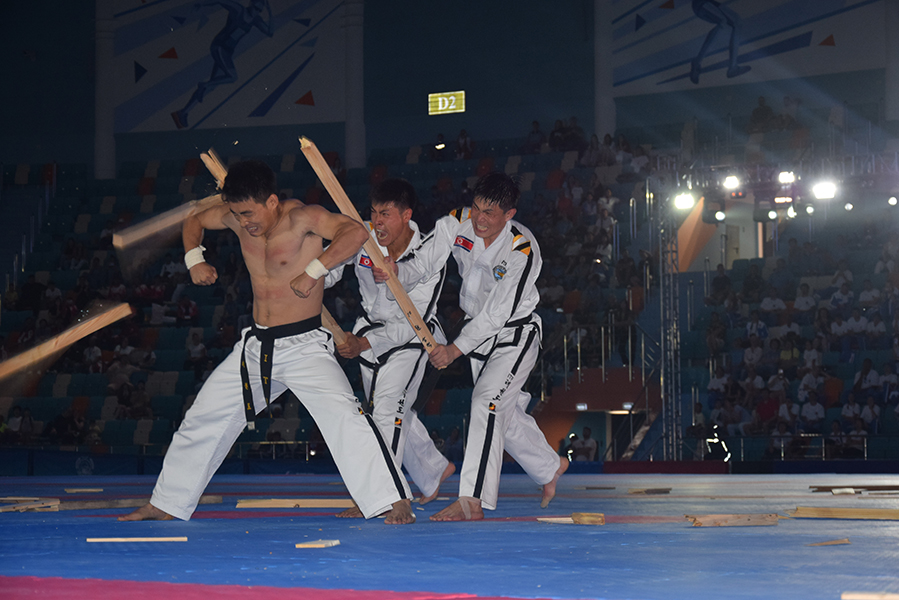
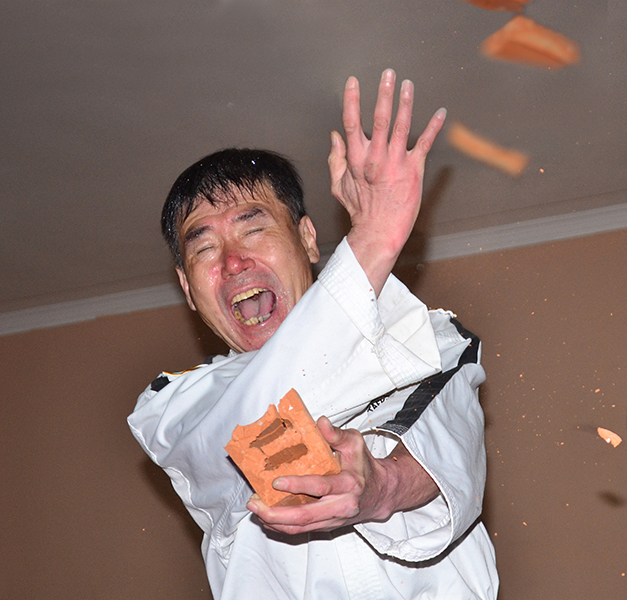
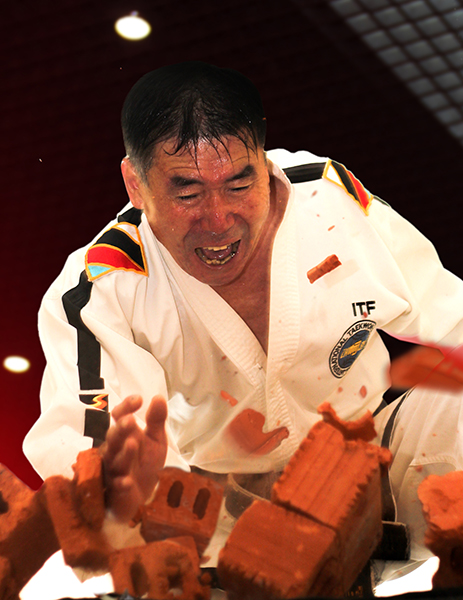
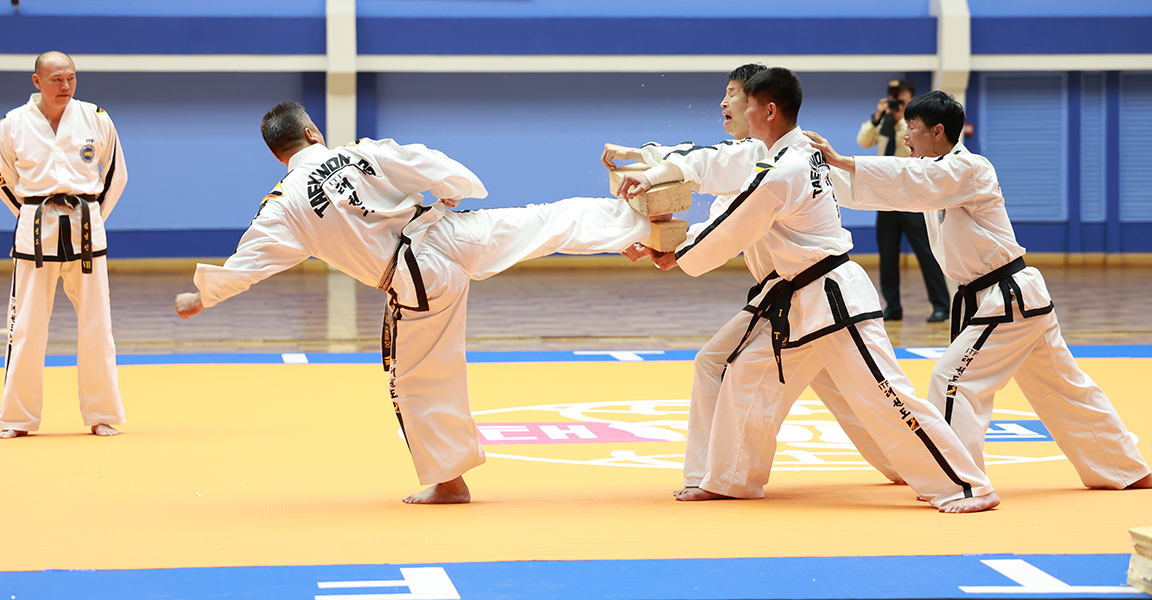
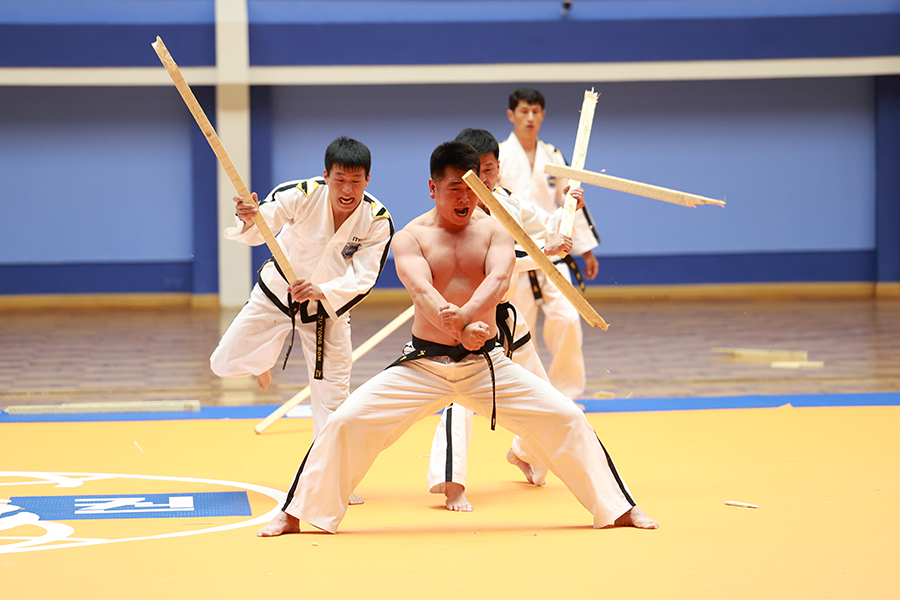
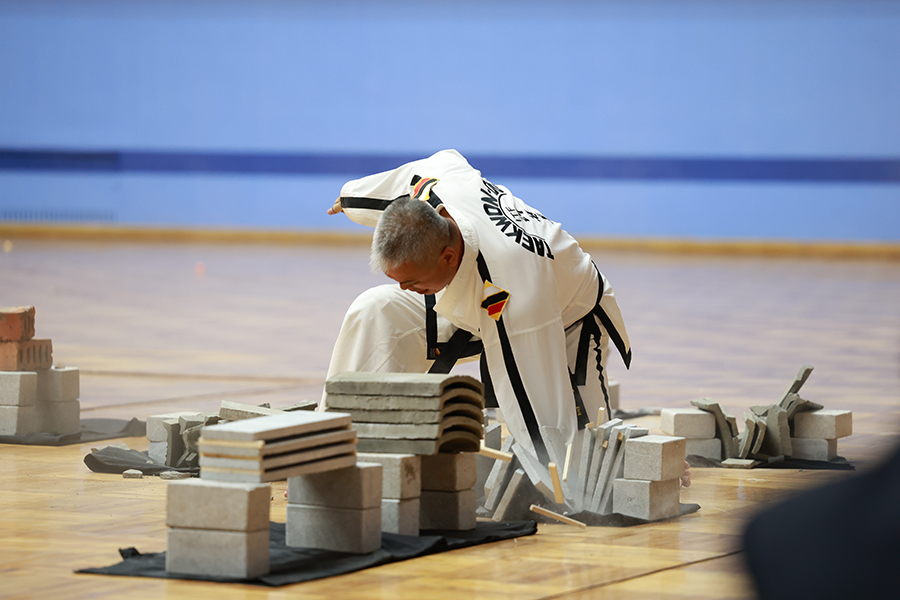
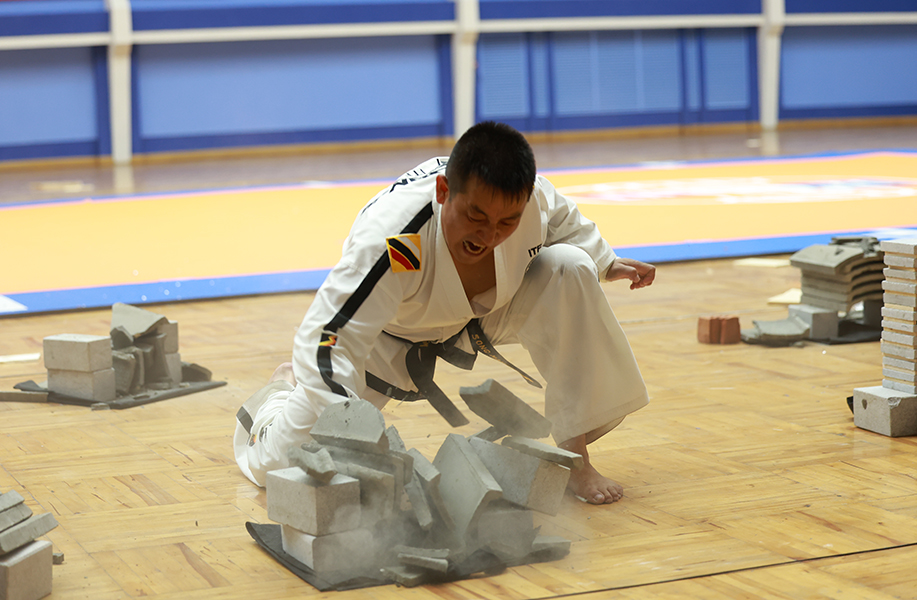
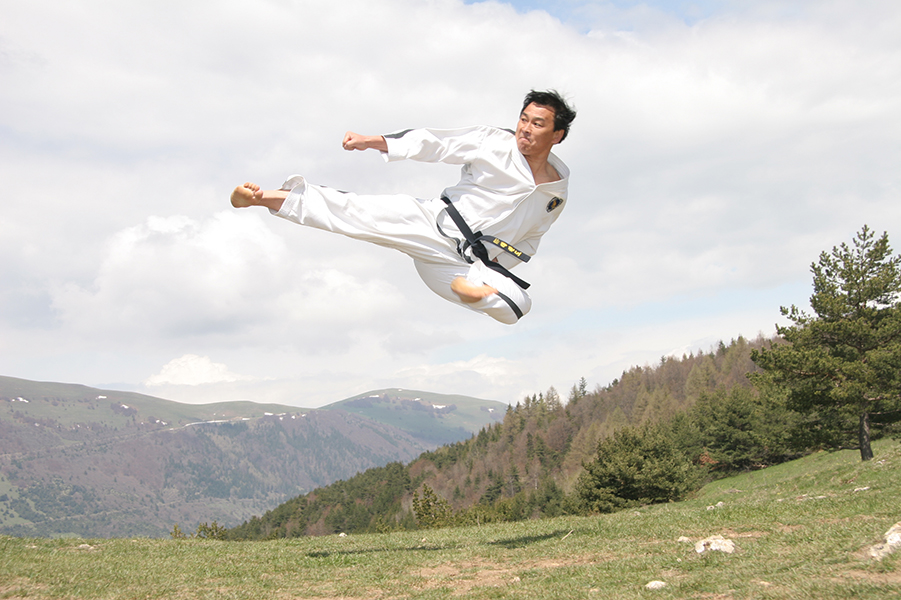
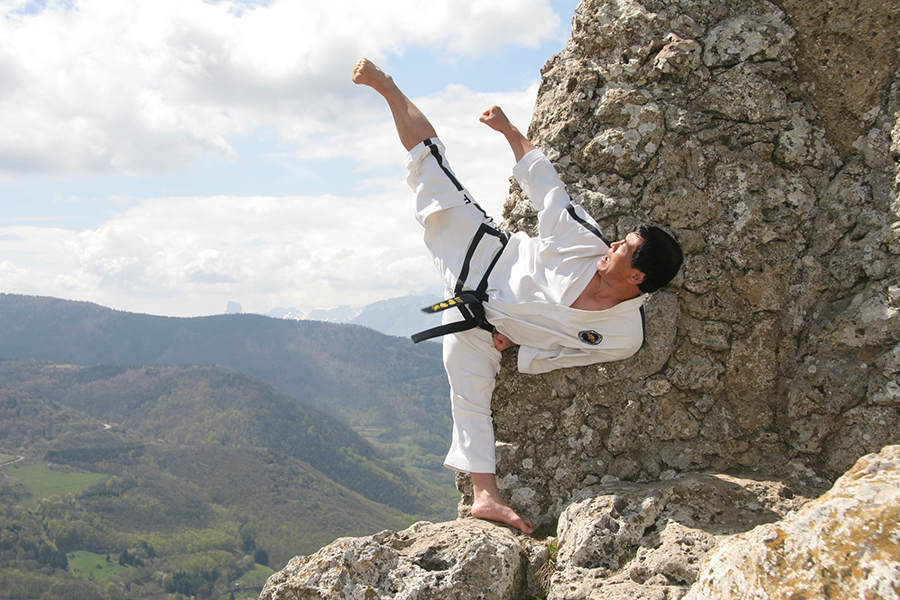
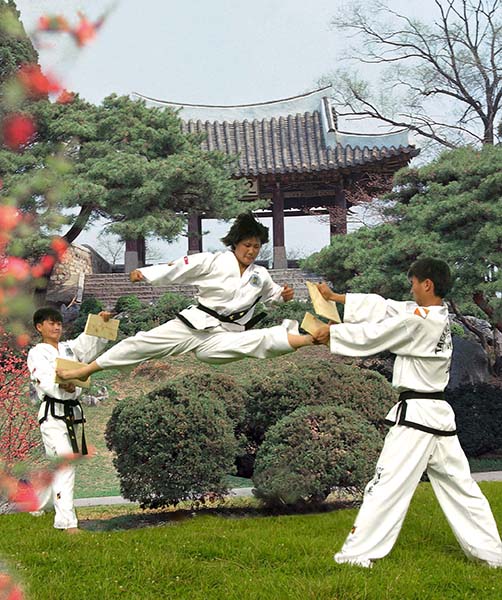
Taekwon-Do is a kind of unarmed combats carrying out attacks and defense with the ultimate use of the power of hands, feet and all other parts of the body gained through intensive physical and mental training. “Tae” means “foot”, “Kwon” means “fist”, “Do” means mental training. Thus the term “Taekwon-Do” indicates high feet, hand techniques and mental training. Taekwon-Do is not a martial art of cultivating superhuman and illusive power but a martial art that helps a man demonstrate his ultimate physical and mental power gained through intensive physical and mental training on the basis of scientific principles. Taekwon-Do is permeated with resolute spirit and soul of the Korean nation who have demonstrated their wisdom and bravery for generations. In the early times of Koguryo when martial arts were encouraged, martial arts styles named “Subaki” and “Taekkyon” were developed and trained. “Subaki” is a martial art style that punches, kicks or defends the opponent with bare hand. “Subaki” is vividly described in many grave paintings drawn in the times of the Three States. In this period “Subaki” was widely practiced as it was militant and practical and therefore it maintained to be one of the vital martial arts trainings until the times of Koryo and Korean Feudal Dynasty. In the late times of the Korean Feudal Dynasty, “Subaki” was further developed by including the usage of foot and became known as “Taekkyon” and “Nalpharam” of Pyongyang. Today, Taekwon-Do is recognized as one of the most outstanding and powerful martial arts styles in the world. On April 11 1955, the late Gen. Choi Hong Hi denominated Korean martial arts style as “Taekwon-Do” which had been called in various names like Dangsoo, Kongsoo, Taekkyon, Kwonbob. Thanks to the efforts of the late Gen. Choi Hong Hi, Taekwon-Do began to be practiced in other countries from 1959 and now it is widely known all over the world.